An engine warning light on the dashboard, a scratched bodywork after parking, a clutch that fails before the end of the contract: with a lease, each type of repair is paid for by a different party. The lease agreement, manufacturer’s warranty and car insurance are three separate layers of cover, and the cause of the damage determines which one applies.
Mechanical breakdown, warranty defect or accident: three situations, three payers
Most articles on the subject lump these three cases together. Let’s take a moment to separate them, because the answer to “who pays?” changes completely depending on the cause of the problem.
First situation: a mechanical breakdown caused by wear and tear. An alternator that gives out, brake pads that need replacing, a worn clutch. These routine maintenance repairs are the lessee’s responsibility. The vehicle remains the lessor’s property under a LOA or LLD agreement, but routine maintenance is the lessee’s responsibility, unless the contract states otherwise.
Second situation: a defect covered by the manufacturer’s warranty. If the turbo fails because of a manufacturing defect while the vehicle is still under warranty, the manufacturer covers the repair. The lessee pays nothing, provided they have followed the maintenance schedule and completed the required servicing. Understanding who is responsible for repairs under a lease means checking whether the manufacturer’s warranty still covers the vehicle when the problem occurs.
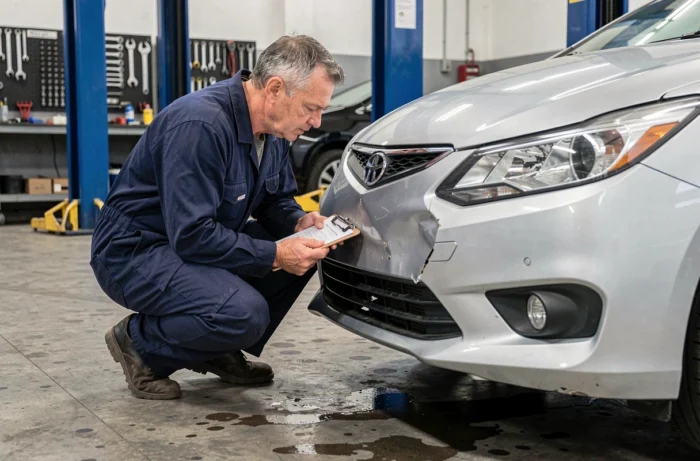
Third situation: an insured event, such as an accident, theft or act of vandalism. This is where car insurance comes in. The lessee reports the incident to their insurer, which pays out according to the cover purchased. The driver is responsible for the excess.

Lease agreements and maintenance: what the clauses provide
A standard LOA agreement does not always explicitly mention “repairs”. Instead, it refers to the obligation to maintain the vehicle and return it in good condition.
In practice, the lessee must keep the vehicle in a condition consistent with normal use. This includes oil changes, tyre replacement, scheduled servicing and minor mechanical repairs.
Lease agreement with or without maintenance included
Some lease agreements include a maintenance package. In that case, servicing and some mechanical repairs are covered by the monthly payments. The lessee pays a slightly higher monthly fee but avoids unexpected costs.
Without this option, the lessee is charged for every repair not covered by the warranty. Before signing, compare the cost of the maintenance package with the likely servicing costs over the term of the agreement.
- Maintenance package included: servicing and replacement of wear-and-tear parts (brakes, filters, windscreen wiper blades) are covered by the lessor through the monthly payment.
- No maintenance package: the lessee chooses a garage, pays for each repair and keeps the invoices as proof of maintenance when returning the vehicle.
- Manufacturer’s warranty still active: manufacturing defects remain covered regardless of the type of agreement, as long as the manufacturer’s conditions are met.
The service record: essential when returning the vehicle
Have you noticed that leasing companies routinely ask for maintenance invoices when a vehicle is returned? There’s a good reason. An incomplete service record can result in reconditioning charges being billed to the lessee, even if the vehicle looks to be in good condition on the outside.
Keep every invoice. Follow the manufacturer’s servicing schedule. These two simple habits can help you avoid sometimes hefty penalties.
Insurance and leasing: cover that affects the bill
The lessor remains the vehicle’s owner throughout the agreement. This has a direct consequence: the leasing company generally requires comprehensive insurance. Third-party insurance alone is almost never enough.
Why is this required? Because the lessor wants to protect its asset. If the vehicle is written off in an accident and the lessee only has third-party insurance, no one will reimburse the lessor for the vehicle’s residual value.
Guaranteed Asset Protection (GAP)
If the vehicle is written off or stolen, the insurer pays out its market value at the time of the incident. This value is often lower than the outstanding balance owed to the lessor, especially during the first few years of the agreement.
Guaranteed Asset Protection, also known as GAP insurance, covers this shortfall. Without it, the lessee must pay the difference out of pocket between the insurer’s payout and the amount still owed to the lessor. This is a cost that is often underestimated when signing the agreement.

Returning a leased vehicle: unexpected charges
When the vehicle is returned, the lessor inspects it and assesses any damage. Not all leasing companies use the same pricing scale, but the principle is the same: normal wear and tear is accepted, while abnormal damage is charged for.
A slightly scuffed bumper after several years of city parking counts as normal wear and tear. A dented bumper or a buckled wheel rim caused by an impact is damage for which the lessee is responsible.
- Normal wear and tear accepted: superficial micro-scratches, slight fading of interior plastics, even wear on the seats.
- Chargeable damage: unrepaired chips in the windscreen, visible dents in the bodywork, permanent stains on the upholstery, tyres worn below the legal limit.
- Missing items: a missing charging cable (for an electric vehicle), jack or spare wheel will be charged at the list price.
The lessor often appoints an independent assessor to inspect the vehicle. If the lessee disagrees with the findings, they can request a second assessment, but this will be at their own expense.
Having a pre-return inspection carried out helps identify issues you can fix yourself, often at a lower cost than the leasing company’s rates. Some garages offer this service for a modest fee, and it often pays for itself straight away.
A lease agreement carefully reviewed before signing, maintenance carried out on schedule with invoices kept, insurance that meets the lessor’s requirements, and a vehicle returned without abnormal damage: these four points cover almost all of the lessee’s financial responsibilities. Everything else, whether a manufacturing defect or an insured incident, is covered by the manufacturer’s warranty or the insurer.