When a situation tips over (imminent eviction, violence, loss of social rights), the difficulty is not knowing that a social worker exists, but finding the right entry point within a few hours. The channels vary depending on the profile of the person concerned, the territory, and the day of the week. The term “social worker” actually encompasses professionals linked to very different structures, which complicates the clarity of the system.
Social emergency: why the right contact depends on your situation
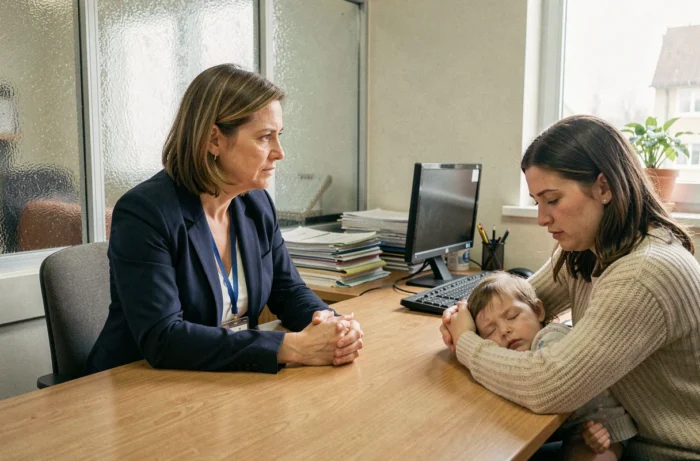
A social service assistant working at the Departmental Council does not have the same missions as one linked to a hospital or the CAF. In an emergency situation, this distinction changes everything: the response time, the type of aid available, and the capacity for direct intervention are not the same from one structure to another.
The Departmental Council remains the main employer of sector social workers. Each territory is divided into zones, and each zone has a designated professional. Contacting the department’s switchboard allows you to be directed to the right person, but callback times vary significantly from one department to another.
The CCAS (Centre communal d’action sociale), linked to the town hall, often serves as a quicker entry point for residents of a municipality. Appointments there are sometimes walk-in, which shortens the process. To find all the urgent procedures on E-woman, you just need to cross-reference these two channels with the specialized services described below.
In a hospital setting, social workers intervene directly with hospitalized patients or those in consultation. Their role is to ensure the continuity of rights (health coverage, accommodation upon discharge) and to coordinate with external services. It is not necessary to go through a doctor to request their assistance: the hospital’s social service generally has its own reception.
Emergency numbers and helplines to know outside office hours
Social worker services operate during administrative hours. In the evening, on weekends, or on holidays, other support services take over, with specific action scopes.
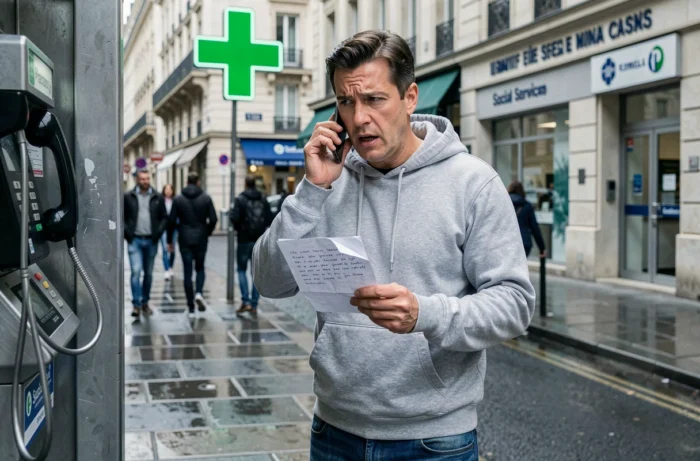
- 115 (Samu social) is the reference number for situations of extreme poverty and emergency accommodation. It operates 24/7 and directs to available places in the territory.
- 119 (Allô Enfance en danger) concerns situations of abuse or danger involving a minor. Accessible day and night, it triggers an evaluation by the departmental child protection services.
- 3114 (national suicide prevention number) has trained listeners who can guide towards social support in addition to psychological care.
- 3018, free and anonymous, is accessible 7 days a week from 9 AM to 11 PM via phone, chat, Messenger, and WhatsApp. It targets minors facing cyberbullying or digital violence and can direct to appropriate protection contacts.
These lines do not replace an appointment with a social worker, but they allow for an intervention or shelter to be triggered when traditional services are closed.
Online or phone social worker: what dematerialization really changes
The CAF offers an internal messaging service from the online personal space. Some simple requests (guidance, questions about rights) receive a response within a few days. However, for an emergency situation, this channel remains too slow.
Departmental platforms now allow for online appointments with a sector social worker. The time-saving is real for those comfortable with digital tools. Feedback from the field varies on this point: in rural or under-resourced departments, the time slots displayed online are sometimes fully booked weeks in advance, which negates the advantage of dematerialization.
The fastest route often remains a direct phone call to the CCAS of your municipality. Town hall secretariats can provide the number even if it does not appear on the website. For those who do not speak French or are not digitally savvy, physically presenting at the town hall reception usually triggers immediate assistance in most cases.
Child protection and educational assistance: an evolving framework
When the emergency concerns a child, the process accelerates through specific channels. 119 remains the main trigger, but what follows depends on the evaluation conducted by the Department’s Information Collection Unit (CRIP).
A notable evolution concerns the right to legal assistance for children in educational assistance proceedings, scheduled for January 6, 2027. This change modifies the preparation for urgent situations involving child protection: families and social workers will need to integrate the possibility of legal support into the process earlier.
This reform implies that sector social workers, departmental services, and families will no longer operate on the same intervention timeline. Early referral to a specialized lawyer will become a step in the system, not a late recourse.
Older adults losing autonomy: local information points
For emergency situations related to aging (falls, hospitalization of a caregiver, compromised home care), local information points dedicated to autonomy coordinate actors beyond simple administrative reception. They inform, guide, and facilitate procedures with home assistance services and temporary accommodation structures.
These information points provide a more suitable first contact than a general call to the department, as the professionals working there know local availability in real-time.
The most effective reflex in the face of a social emergency remains to combine two simultaneous actions: call the specialized number corresponding to the situation (115, 119, 3114) and contact the CCAS of your municipality the next morning to formalize follow-up. One triggers shelter, the other opens long-term support.