Decor trends refer to the aesthetic and technical orientations that shape interior design choices over a given period. They encompass color palettes, materials, furniture shapes, and layout principles adopted by industry professionals. Understanding these trends allows for coherent choices during a decoration project, rather than accumulating disparate inspirations.
Neuro-friendly decoration: designing for cognitive comfort
In recent years, studios like Studio KDA (Paris) and designers like Clémence Pirajean have developed an approach called neuro-friendly decoration. The principle is based on reducing cognitive load in living spaces: fewer harsh contrasts, non-glare lighting, a limitation on repetitive patterns, and shiny surfaces.
This approach is not limited to aesthetic choices. It addresses a concrete need, particularly for hypersensitive or neurodivergent individuals, by promoting mental calm in the home environment. Projects presented at the Maison&Objet 2024 and 2025 fairs, as part of “Design and Neurodiversity” conferences, illustrated this approach.
In practical terms, applying this concept means favoring muted tones and matte materials in the living room or bedroom. To delve deeper into decoration with La Bonne Maison, these principles translate into choices of colors and textures that serve well-being as much as style.
- Replace direct white light spots with diffused warm temperature fixtures directed towards the walls or ceiling
- Prefer absorbent textiles (thick linen, boucle wool) over reflective surfaces like lacquered glass or polished metal
- Limit to two or three different patterns per room to avoid visual saturation
Traceable materials and digital passport: what changes for furniture
The European regulation on eco-design for sustainable products (ESPR), adopted in 2024 by the European Union, is gradually changing the way furniture and decorative objects are designed and marketed. Brands like Vitra, Arper, or Kvadrat are beginning to integrate digital product passports detailing the composition, reparability, recyclability, and origin of each piece.
For an individual furnishing their interior, this traceability has a direct consequence: interior architects and decorators are now directing their recommendations towards furniture and textiles whose origin and durability are documented. The “sustainable” criterion is no longer limited to a generic label; it becomes verifiable.
Choosing traceable furniture means investing in a piece whose lifespan is considered from the design stage. The rise of these passports is expected in the coming years, in line with the European timeline. Anticipating this evolution allows for creating an interior that ages well, without aesthetic or material obsolescence.
Colors and textures in interior decoration: depth over shine
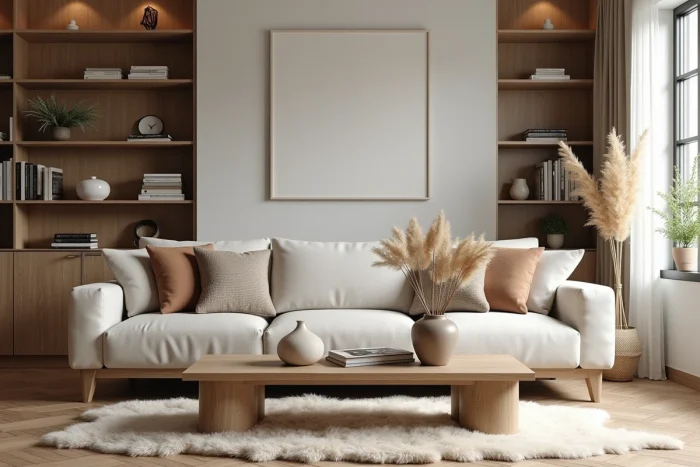
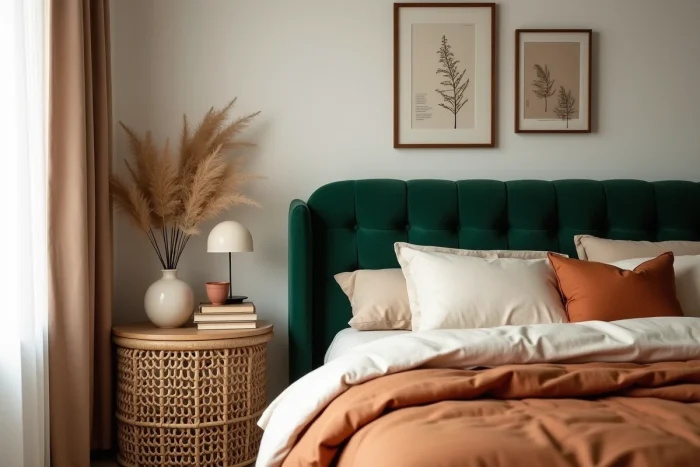
The color palettes currently dominating decoration projects are moving away from clinical whites and saturated hues. Deep tones (burgundy, warm brown, forest green) are making a comeback in living rooms and common areas, often paired with natural materials like walnut or stone.
This shift towards depth is also reflected in the choice of textures. The idea of layering multiple materials in the same space (a boucle fabric sofa, a jute rug, matte velvet cushions) creates what professionals call a textured depth. The result is an interior that is perceived as much by touch as by sight.
Furniture with curved and organic lines contributes to this same logic. Rounded shapes soften the volumes of a room and break away from the right angles that are ubiquitous in contemporary architecture. An armchair with curved arms or a coffee table with rounded edges is enough to change the perception of a space.
Visible upcycling and the end of the total look: personalizing your decor style
The “total look,” which involved decorating an entire room in a single style with matching pieces from the same manufacturer, is losing ground. The current trend values the embraced mix: a restored vintage piece coexists with a contemporary piece without the overall feeling being incoherent.
Visible upcycling pushes this logic further. Signs of repair or transformation (a table leg replaced with a different material, a re-colored seating fabric) become decorative elements in their own right. This aesthetic choice aligns with the question of sustainability: extending the life of an object reduces resource consumption while creating a unique interior.
Combining pieces from different origins without a taste faux pas
The guiding thread that allows for mixing styles without losing coherence is the color palette. Two objects of very different styles appear connected if they share the same color range or type of material (light wood, black metal, raw ceramics).
- Define three dominant colors for the room before any purchase, then stick to them regardless of the style of the added objects
- Keep a recurring material (brass, oak, linen) as a common thread between new elements and vintage finds
- Avoid concentrating all old objects in one corner and new ones in another; the distribution should be balanced throughout the space
Decorating an interior is best thought of as a progressive assembly rather than a one-time purchase. Traceable materials, layouts that respect sensory comfort, and pieces from upcycling share a common principle: each chosen element serves a specific function in the space. A decorative object that does not serve comfort, visual coherence, or durability has little reason to remain.