Your interior, your meals, your clothing tell a way of life. For a few months now, lifestyle trends are no longer limited to decoration or fashion. They touch on how we live, how we eat, and how we take care of ourselves on a daily basis. What changes in 2026 is the convergence of these topics around a common search: a simpler, more grounded daily life, more adapted to what we actually experience.
Climate-Adapted Housing: The Trend Redefining Indoor Comfort
Have you noticed that recent summers turn some homes into furnaces? The ideal habitat is no longer just about beautiful interior design. More and more people now value a home that can remain comfortable during heatwaves, without relying solely on air conditioning.
Specifically, this drives choices in decoration and layout that also serve thermal regulation. Thick linen curtains, interior shutters, light colors on sun-exposed walls: these decisions are no longer just about style. Interior design becomes a lever for climate comfort, not just an aesthetic exercise.
Another strong signal: more than half of those surveyed envision their ideal life across multiple residences. This aspiration is particularly pronounced among 18-24 year-olds. For those who split their daily life between city and countryside, it’s essential to discover more articles that address this multi-location lifestyle, where each space has its own style without multiplying unnecessary purchases.
Fashion Trends and Sustainable Textiles: What the Anti-Fast Fashion Law Changes
The textile sector is where lifestyle intersects most directly with regulation. The French law against ultra-fast fashion changes the rules of the game for brands that renew their collections at a frantic pace. The goal: to curb textile overproduction through concrete constraints.
Why does this topic concern your daily life? Because alternatives are developing in parallel. The textile repair bonus, for example, allows you to mend or adjust a garment at a lower cost. Previously, repairing a torn pair of jeans seemed outdated. Today, it’s a style gesture as much as an economic choice.
The fashion ideas rising in 2026 revolve around a few simple principles:
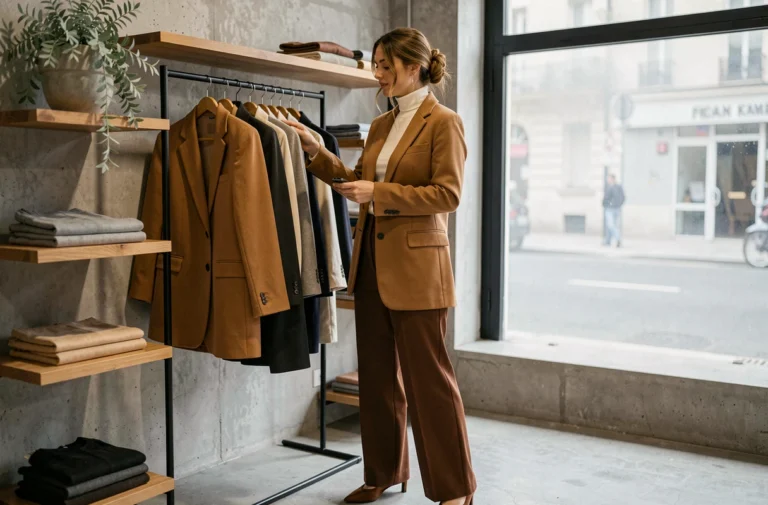
- Favor durable pieces with traceable materials, rather than following every micro-seasonal trend
- Use the repair bonus to extend the life of clothes you already love, which is cheaper than replacing them
- Compose a limited but coherent wardrobe, where each piece combines with several others
This is not a step backward. It’s a way to regain pleasure in your clothing without the weariness that follows impulsive purchases.
Everyday Eating: Balancing Pleasure, Health, and Budget
The study “The French Eater 2025-2026,” presented by GECO Food Service and conducted with Ifop, Sociovision, and Brain Value, describes a consumer in tension. We want to eat healthily. We want to indulge ourselves. And we are working with a limited budget and time.
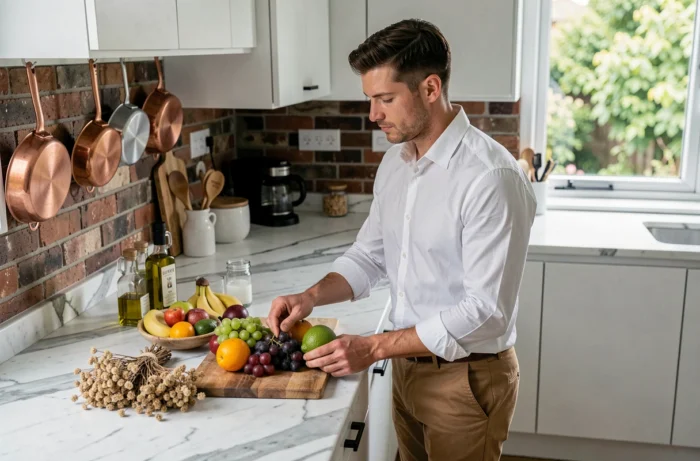
There is no longer a single dominant food model. The study highlights the diversity of contexts: meals at home, at work, delivery, on the go. Each situation calls for its own choices. Sunday meal prep doesn’t suit everyone, and restaurants are not reserved for special occasions.
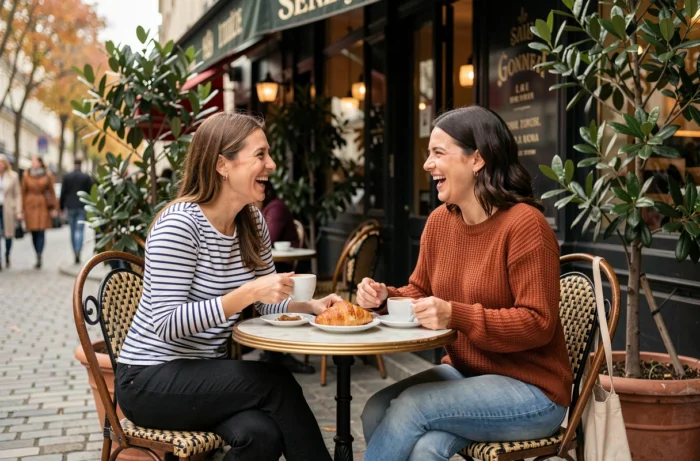
What emerges as a food lifestyle trend is the end of singular injunctions. Eating “well” depends on your day, your energy, what you have in the fridge. The popular content on this topic offers adaptable recipes, with a simple base and variations based on mood or budget.
Pleasure as a Central Criterion
The key takeaway from this study is the place of pleasure. Consumers do not want to sacrifice taste for health. Food hedonism coexists with nutritional vigilance. A dish can be indulgent and reasonable. It’s this dual requirement that guides new culinary ideas.
Beauty and Care: Simplicity as a New Requirement
Beauty routines with twelve steps are losing ground. The trend in 2026 is towards short routines, with products whose compositions are understandable. French consumers are increasingly drawn to so-called “green” beauty, but they especially expect transparency and simplicity.
Here’s what this means in practice:
- Fewer products in the bathroom, but formulas where each ingredient has an identifiable function
- Growing distrust of greenwashing: labels alone are no longer enough; consumers want to understand what they apply to their skin
- The effective routine replaces the Instagrammable routine, with two or three versatile products instead of a dozen specialized bottles
This movement towards simplicity aligns with other lifestyle trends of 2026. Whether for the home, clothing, or food, the common thread remains the same: do less, but do it better.
Interior Decoration and Colors: What Changes in Our Choices
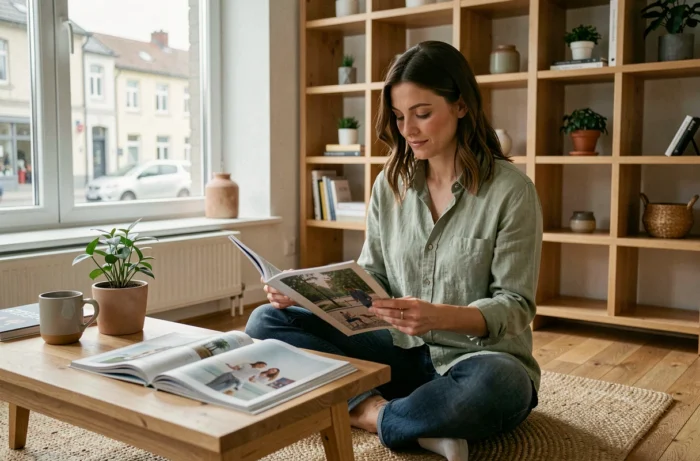
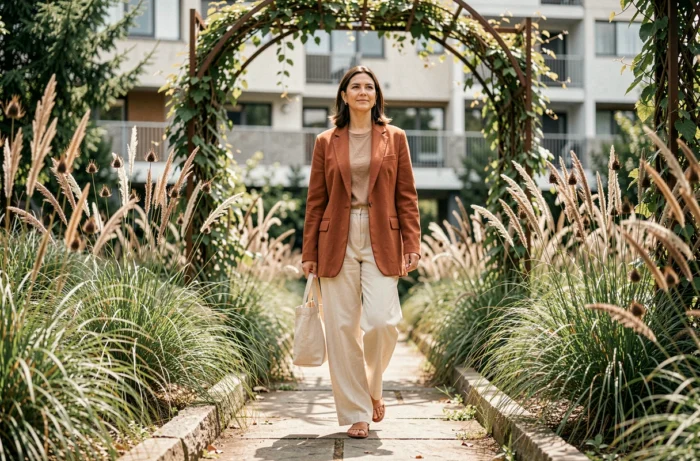
In decoration, soft colors and natural materials continue their progression. Raw wood, linen, terracotta are not new, but their use is evolving. They are now paired with bolder shades (deep terracotta, sage green, muted blue) to create atmospheres that do not resemble a catalog.
Art and handmade objects replace mass-produced decorative accessories. An imperfect ceramic on a shelf, a print from a local artist rather than a generic poster: these choices reflect a need for authenticity in interior design.
Interior design in 2026 is characterized by a rejection of the total look. Mixing styles, eras, and origins results in a more personal outcome than a fully coordinated piece. It’s a change in posture: we no longer decorate to show off, we design to live.
The lifestyle trends of 2026 share a common foundation. Climate adaptation of housing, sustainable fashion regulated by law, food without a single dogma, transparent beauty, personal decoration: each domain moves towards greater coherence between what we buy and what we live. Daily life does not need a revolution. It benefits from being adjusted, one choice at a time.